 How-to
How Do You Prepare for a Walking Safari in Zambia?
Last Updated: November 15, 2026
Quick Summary
To prepare for a walking safari in Zambia, build a reasonable base level of fitness so you can walk two to three hours on uneven ground in warm weather, break in your boots months ahead and pack neutral clothing, a wide-brimmed hat and at least 1.5 litres of water. Start training about eight weeks out and follow your armed guide's instructions without hesitation.
- Walks are generally gentle to moderate, with the pace set by the slowest member of the group.
- Start your training plan eight weeks before departure, walking three times a week.
- Choose sturdy boots with grip and ankle support rather than trainers, and break them in early.
- Carry a refillable water bottle of at least 1.5 litres and drink before you feel thirsty.
- The dry season in Zambia runs roughly from June to September, when vegetation thins.
Table of Contents
- What to Expect on a Walking Safari in Zambia
- Walking Safari Fitness Requirements: How Fit Do You Need to Be?
- What to Bring on Safari: The Essential Packing List
- Walking Safari Clothing and Footwear for Zambia's Bush
- Walking Safari Safety: Armed Guides, Briefings and Wildlife Etiquette
- Health, Hydration and Insect Protection on Foot
- When to Go and a Day-by-Day Preparation Timeline
- Planning Your Walking Safari with Isba African Safaris
- Frequently Asked Questions
What to Expect on a Walking Safari in Zambia
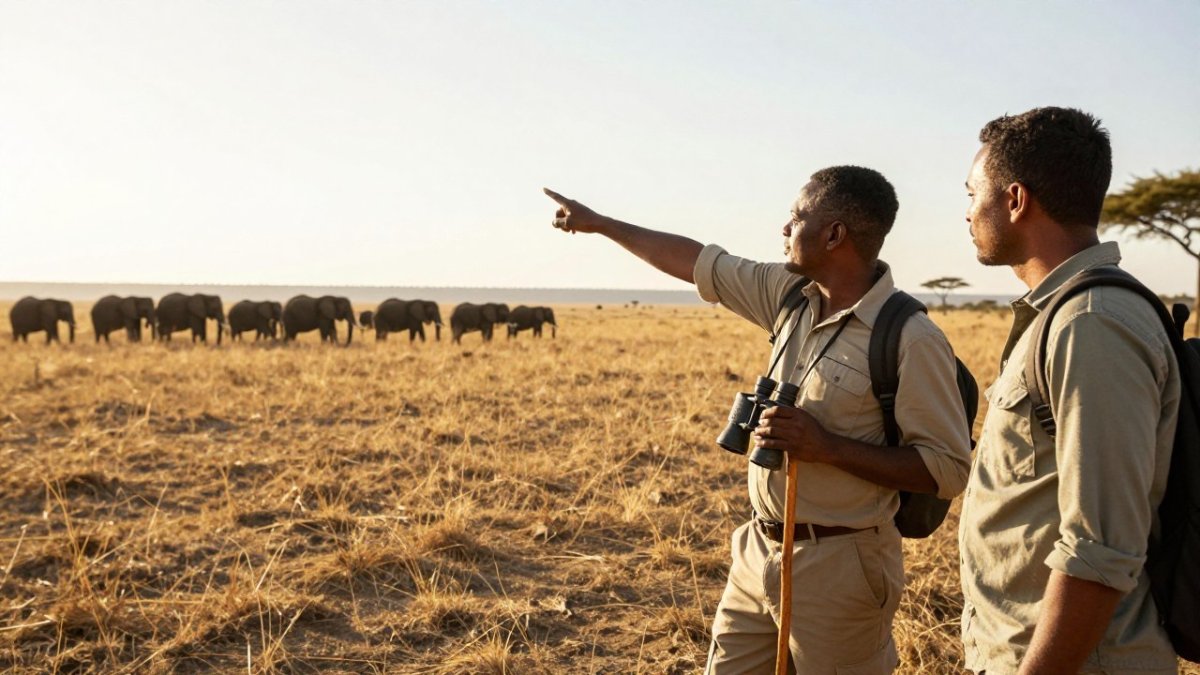
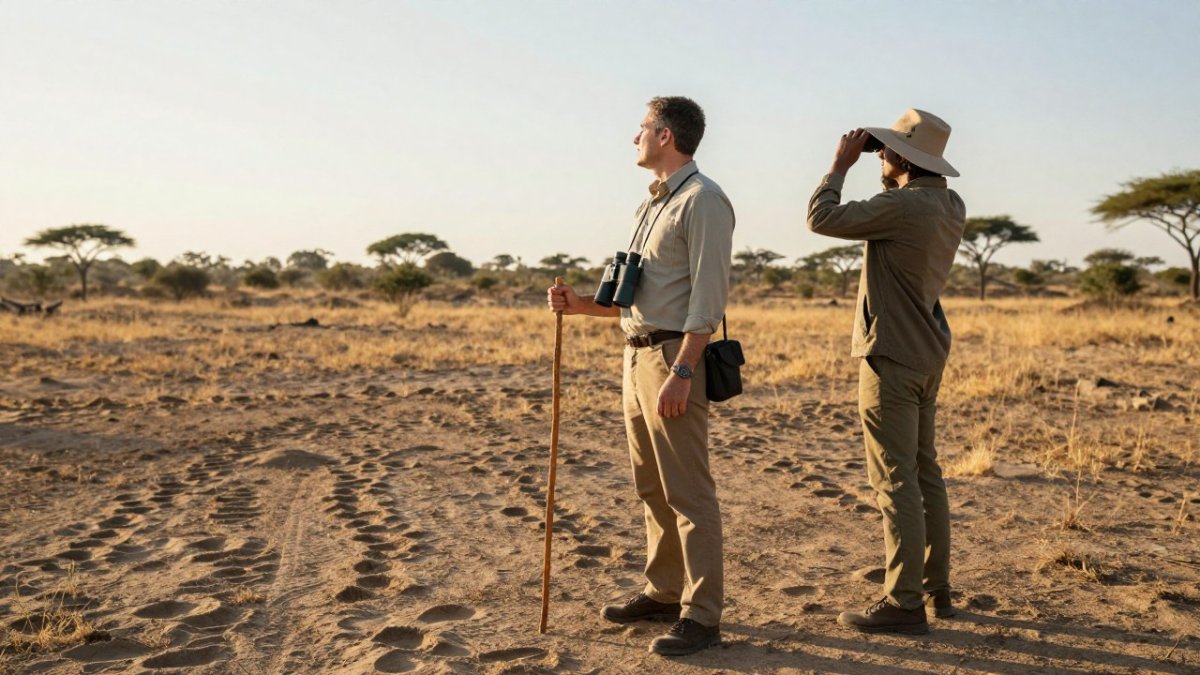
A walking safari in Zambia puts you on foot beside an armed guide in big-game country, tracking wildlife at a slow, quiet pace rather than watching it from a vehicle (TOP 4 REASONS TO LOVE WALKING SAFARIS).
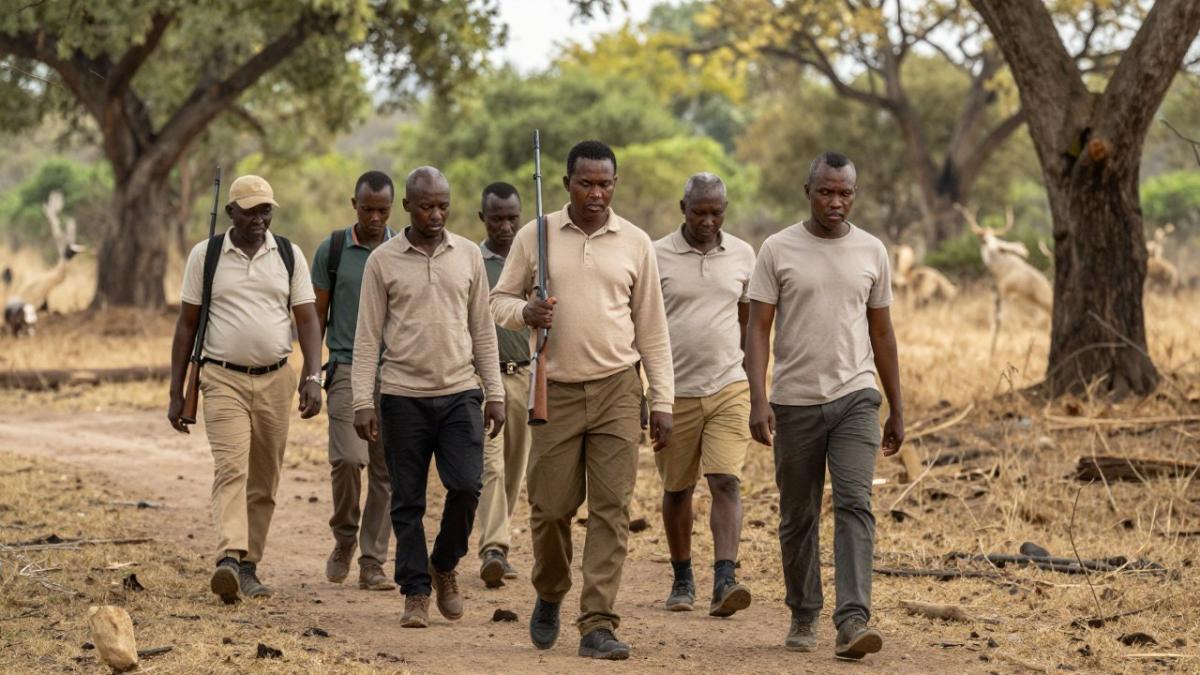
A walking safari follows this rhythm. The pace is slow on purpose. You read tracks, stop for birds, and learn how the bush fits together.
A typical morning follows a simple pattern:
- A safety briefing before you leave camp
- A slow walk with frequent stops for tracking and photography
- A mid-morning break for tea or coffee
- A return to camp before the heat builds
How a Walking Safari Differs from a Vehicle Safari
A vehicle safari covers ground fast and gets you close to animals from a seat. A walking safari trades distance for detail. You notice termite mounds, dung beetles, alarm calls and fresh spoor, and you feel the scale of the bush at eye level.
The trade-off is reach. On foot you see less ground in a day. What you see, you understand far better.
South Luangwa and North Luangwa: Where the Walks Happen
South Luangwa National Park is widely known for its oxbow lagoons and riverine woodland. North Luangwa is generally quieter and more remote than its southern neighbour.
Walking Safari Fitness Requirements: How Fit Do You Need to Be?
You need a reasonable base level of fitness, not athletic conditioning. If you can walk for two to three hours on uneven ground in warm weather without distress, you are ready for most standard walks. Walks are generally gentle to moderate, with frequent stops for tracking, birds and photography.
Be honest with yourself here. Zambia's dry season brings heat, dust and soft sand along riverbeds. The terrain you will meet is rarely flat: riverine woodland with fallen logs, sandy dambos that give underfoot, and short climbs onto termite mounds and ridges.
Matching Preparation to Your Fitness Level
A common pattern is that walkers underestimate the effect of heat and soft sand rather than distance. Adapt your preparation to where you currently are:
- If you are new to regular exercise: start with 20- to 30-minute walks four times a week on flat ground, and build to 60 minutes over six to eight weeks. Focus on consistency rather than speed.
- If you walk regularly but not on trails: add one weekly walk on uneven ground, such as a park path, beach or woodland trail, and practise walking in your safari boots rather than trainers.
- If you are fit and active: add one longer walk of 90 to 120 minutes a week with a lightly weighted daypack, and include a hill or soft-sand section to mimic riverbed conditions.
- If you have joint, heart or respiratory concerns: speak to your GP before booking, and ask your operator about shorter walks, vehicle back-up and rest options. Many camps can tailor the distance.
A Practical Pre-Trip Training Plan
Start eight weeks out. Three sessions a week is plenty.
- Weeks 1-2: Walk 45 minutes on flat ground, three times a week
- Weeks 3-4: Extend to 60 minutes and add one hill or uneven trail
- Weeks 5-6: Walk 90 minutes once a week in your safari boots
- Weeks 7-8: Add a weighted daypack and practise walking in the heat of the day
A common mistake is buying new boots the week before you fly. Break them in months earlier or you will spend your first walk managing blisters.
Distances, Pace and Rest Breaks to Expect
If you are concerned about keeping up, tell your guide at the briefing so the route or pace can be adjusted. There is no shame in a shorter walk, and a good guide would rather tailor the pace than have you struggle.
Watch out: training only on a treadmill or flat pavement leaves your ankles and knees unprepared for soft sand and uneven ground, so include at least one weekly trail walk in the final month.
For a fuller breakdown of matching safari types to fitness levels, read our guide on Safari Planning for Different Fitness Levels.
What to Bring on Safari: The Essential Packing List
Pack light and pack neutral. On foot, everything you carry matters, and bright colours and strong scents work against you.
Use this checklist as your baseline:
- Neutral-coloured clothing: khaki, olive, tan, grey
- Broken-in walking boots with ankle support
- Wide-brimmed hat and sunglasses
- High-factor sunscreen and lip balm
- Binoculars and a camera with a zoom lens
- Refillable water bottle, at least 1.5 litres
- Small torch or headtorch
- Personal medication in a labelled pouch
- Insect repellent containing DEET
- Light rain shell in the green season
Leave the bright white shirt and the perfume at home. Both draw attention you do not want.
Walking Safari Clothing and Footwear for Zambia's Bush
Dress in layers and think about thorns, sun and dust. Long trousers and long sleeves protect your legs and arms from scratchy scrub and biting insects, even when it is warm.
Fabric choice matters. Cotton is comfortable but stays damp. Quick-drying synthetic blends handle sweat and a midday rinse far better.
Footwear is the decision that makes or breaks your trip. Choose sturdy boots with grip and ankle support, not trainers. Sandals are fine around camp in the evening, never on a walk.
Walking safari clothing and footwear should also be quiet: no rustling waterproofs, no jangling zips. Wildlife hears more than it sees.
Walking Safari Safety: Armed Guides, Briefings and Wildlife Etiquette
Walking safari safety rests on one principle: you follow your guide's instructions without hesitation. Guides read animal behaviour constantly and make the call on distance, direction and when to stand still. The real safety tool is the guide's judgement and your compliance.
Walks typically begin with a safety briefing covering hand signals and how to move as a unit. Walking in single file behind the guide and staying silent near wildlife is standard practice. If the guide raises a hand or crouches, you stop and mirror them immediately, even if you cannot see why.
Wildlife Viewing and Photography Etiquette
Good etiquette protects both you and the animals, and it is part of what makes a walking safari work. The rules are simple but non-negotiable:
- Stay behind the guide and never wander off, even for a photograph
- Keep voices low and movements calm; avoid sudden gestures or standing up when the group is crouched
- Never run, and never turn your back on an animal
- Ask before taking a photo that requires stopping the group or changing position
- Follow the guide's signal instantly, even if you do not see the danger
- Do not use flash around wildlife, and silence your camera's shutter and beeps before you leave camp
- Keep a respectful distance; if an animal changes its behaviour because of you, you are too close
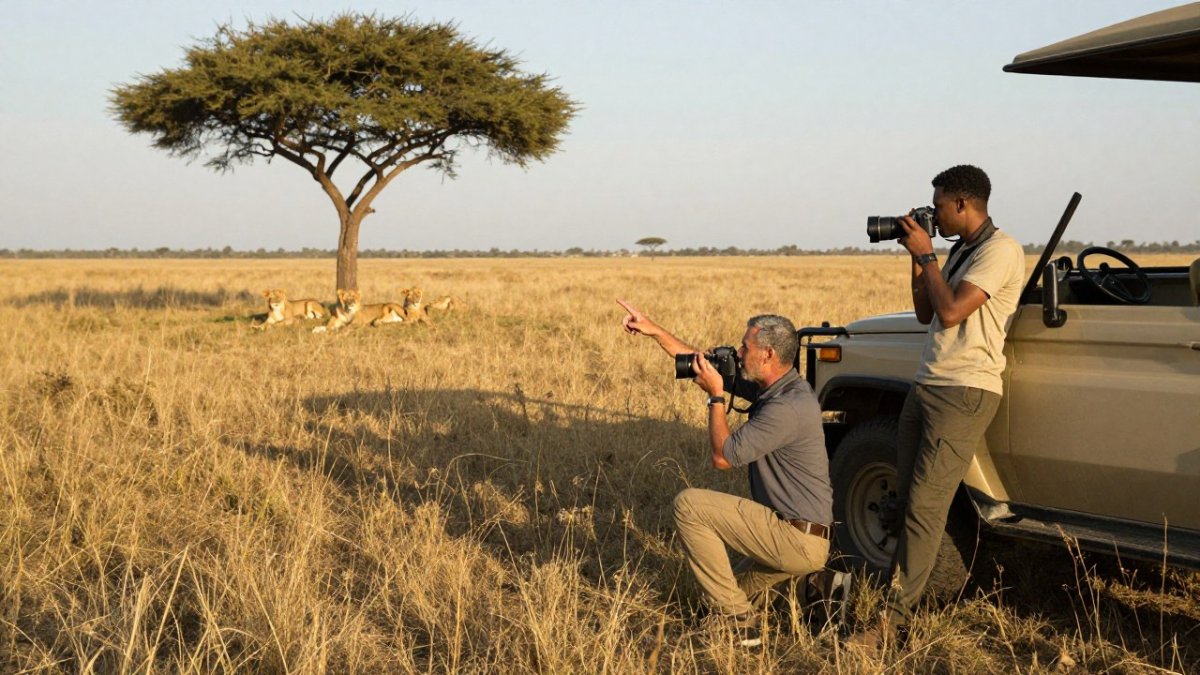
Photography on foot differs from photography from a vehicle, and the guide's positioning matters a great deal.
What to Do If Wildlife Approaches
If an animal moves towards the group, the guide will assess the situation and decide how to respond. Your job is to do exactly what you are told, keep the group tight and avoid sudden noise. Do not climb a tree, do not run and do not try to film while backing away.
Stepping out of line without telling the guide can split the group and put everyone at risk.
Choosing a guide is an important decision. Our article on how to choose experienced safari guides in Africa explains what to look for before you book.
Health, Hydration and Insect Protection on Foot
Hydrate before you feel thirsty, because thirst arrives late in dry heat. Drink steadily through the morning and carry more water than you think you need.
Zambia's walking season sits in the dry months. Malaria risk does not disappear, so speak to a travel health clinic about antimalarials and vaccinations well before departure.
Insect protection is a routine, not a single spray:
- Apply repellent to exposed skin before you leave camp
- Wear long sleeves at dawn and dusk
Watch out: skipping the morning repellent because it feels cool and breezy is the mistake most walkers make. Tsetse flies and mosquitoes are active when you least expect them.
When to Go and a Day-by-Day Preparation Timeline
The dry season in Zambia runs roughly from June to September, when vegetation thins and animals gather near water.
A typical preparation timeline for the final weeks looks like this:
| When | What to Do |
|---|---|
| 8 weeks out | Book flights, confirm camps, start training walks |
| 6 weeks out | Visit a travel clinic, arrange antimalarials |
| 4 weeks out | Break in boots, buy neutral clothing, check camera gear |
| 2 weeks out | Finalise packing list, confirm transfers and insurance |
| 1 week out | Pack, weigh bags, download offline maps and documents |
| Day before | Charge everything, lay out clothes, sleep early |
For month-by-month wildlife guidance, see our best months for African wildlife viewing.
Planning Your Walking Safari with Isba African Safaris
A walking safari rewards preparation, and the planning stage is where most trips are won or lost. Getting the fitness, kit and timing right helps make the walks more enjoyable.
This is where we come in. Isba African Safaris builds tailor-made itineraries around your group, your pace and your interests.
Multi-generational groups with different fitness levels can be accommodated as part of tailor-made planning.
If you want the full picture before you commit, our bespoke African safari planning guide walks through the process, and our guide on how to choose a safari operator you can trust covers the questions worth asking any company, ours included.
The gap between a good walking safari and a forgettable one is almost always preparation. Get your boots broken in, your fitness honest and your kit neutral, and Zambia's bush will do the rest.
Frequently Asked Questions
What should I wear on a walking safari in Zambia?
Stick to neutral colours such as khaki, olive and sand, and avoid bright white. Wear long trousers and a long-sleeved shirt for thorn and insect protection, plus a wide-brimmed hat and sunglasses. Walking safari clothing and footwear should be broken in before you travel: light, breathable layers for the morning chill and sturdy walking shoes with good grip for sandy riverbeds and uneven ground.
How fit do you need to be for a walking safari?
Walks are generally at a slow pace with frequent stops for tracking and photography, so you do not need to be an athlete. Walking safari fitness requirements come down to being comfortable on your feet for a few hours in heat. Build up with 30 to 60 minute walks several times a week in the months before you go, and tell your operator about any mobility or health concerns so the pace and distance can be adjusted.
Is a walking safari in Zambia safe?
Walking safari safety rests on clear rules: stay in single file, keep quiet, follow instructions immediately and never wander from the group. Guides generally read animal behaviour closely and adjust the route when needed.
How long does a walking safari in Zambia last?
A single morning walk typically lasts two to four hours, covering a few kilometres at a slow pace. Walks can be paired with vehicle game viewing across a multi-day safari. The dry season from June to September is the most popular window, though the green season from around November to April brings lush vegetation, fewer visitors and excellent birding.