 How-to
How to Choose a Safari Operator You Can Trust
Quick Summary
To choose a safari operator you can trust, check its licensing and insurance, confirm your guide's experience, and make sure your deposit is protected before you pay. A good operator designs the whole trip, provides a safe 4x4 and a trained local guide, and answers your questions clearly and promptly in writing.
- Ask the operator to show licence and insurance certificates, then verify them yourself with the national tourism authority.
- Ask how many years each guide has worked in the parks you will visit.
- Ask which insolvency scheme protects your deposit, and verify it with the scheme operator directly.
- Never pay a large deposit by bank transfer to an unverified account.
- Request a full written breakdown of what each quote includes, as low headline prices can hide extra costs.
Table of Contents
- How to Choose a Safari Operator You Can Trust
- What a Safari Operator Actually Does for You
- How to Plan an African Safari Around Your Operator
- Checking Licensing, Insurance and Operator Credentials
- Protecting Your Money: Payment Security and Insolvency Cover
- Reading Safari Operator Reviews Critically
- Mid-Range African Safari Tours: Getting Value Without Cutting Corners
- Tailor-Made Safari With Local Guide: Questions to Ask Before You Book
- Frequently Asked Questions
How to Choose a Safari Operator You Can Trust
Last Updated: 4 November 2026
What a Safari Operator Actually Does for You
Choosing the right safari operator is the single biggest decision in planning an African trip. Isba African safaris is a bespoke operator built around its own 4x4 fleet and local guides. A safari operator is the company that designs your itinerary, books your lodges and parks, provides transport, and puts a guide in the vehicle with you.
A safari operator is not just a booking agent. Good operators take responsibility for the whole trip, from the first enquiry to the last transfer home.
Here is what a strong operator typically covers:
- Itinerary design: matching parks, lodges and travel days to your interests and fitness
- Logistics: flights between parks, park permits and transfers
- Vehicles: a safe, comfortable 4x4 suited to rough tracks
- Guiding: a trained local guide who finds wildlife and explains what you see
- Support: someone to call when plans change or something goes wrong
Ask yourself one question early: will this company still be looking after me when something goes wrong on day four?
A strong operator typically covers the following areas, so you can check each one during your enquiry.
| Area | What it covers | Why it matters |
|---|---|---|
| Itinerary design | Parks, lodges and travel days | Matches the trip to your interests and fitness |
| Logistics | Flights, park permits and transfers | Keeps the route moving between parks |
| Vehicles | A safe 4x4 suited to rough tracks | Comfort and safety on remote tracks |
| Guiding | A trained local guide | Finds wildlife and explains what you see |
| Support | Someone to call when plans change | Helps when something goes wrong |
How to Plan an African Safari Around Your Operator
Plan your safari around the operator, not the other way round. Many travellers pick destinations first and then struggle to find an operator who fits. A better approach is to describe your ideal trip to two or three operators and let them shape the route.
Before you contact anyone, settle these basics:
- Choose your priority: big cats, gorillas, birdlife, or photography
- Set your travel window: dry season usually gives better game viewing
- Decide your group type: couple, family, solo, or self-drive
- Agree a rough budget range: and ask operators to build around it
A good operator will ask questions back. If they only send a generic package, look elsewhere. Isba African safaris, for example, offers flexible, tailor-made planning based on client budget.
Watch out: planning the route before the operator is chosen often means paying for lodges and flights that a better-placed operator would have avoided.
Checking Licensing, Insurance and Operator Credentials
Before you pay anything, check that the operator is properly registered and insured in the country where it runs tours. Licensing rules differ between countries, so confirm the requirements for the specific destination with the relevant national tourism authority. Ask the operator to show their licence and insurance certificates, then verify them yourself.
Verifying Guide Experience and Training
Your guide makes or breaks a safari. Ask how long each guide has worked in the parks you will visit, and whether they hold national guiding qualifications. Ask whether they are locally trained, since local knowledge of animal movements and tracks is hard to replace.
Good questions to put to an operator include:
- How many years has the guide worked in this park?
- Are guides bilingual, and can they explain wildlife in your language?
- Will I have the same guide for the whole trip?
A guide who is confident answering these questions is usually a good sign. Isba African safaris describes its team as bilingual, locally trained and experienced, which is the kind of detail you should be able to confirm during your enquiry.
Vehicle Maintenance and Safety Standards
Your vehicle matters as much as your guide. To see what support and standards a self-drive setup should include, read essential support for self-drive safari vehicle rental. Ask whether the operator owns its fleet or sub-hires it, and how often vehicles are serviced.
Ask about the vehicle's suitability for the tracks you will drive. Open 4x4 safari vehicles give better views, but enclosed options may suit cooler or wetter seasons.
Protecting Your Money: Payment Security and Insolvency Cover
Safari bookings are expensive, often paid months before travel, so the money question is not just 'is this operator good?' but 'what happens to my deposit if they fail?' This section covers insolvency protection, which is where travellers can lose money and where information is often unclear.
Start with the payment mechanics. Never pay a large deposit by bank transfer to an unverified account. Use a traceable method, ask for a written itinerary and contract before you send money, and confirm the account name matches the registered company name exactly. A common pattern is for a legitimate-looking website to route payments to a personal account or a third-party agent; that is a red flag, not a shortcut.
Check these points before you pay:
- Deposit terms: how much is required, and when the balance falls due
- Cancellation policy: what you lose if you cancel, and the notice periods that apply
- Insolvency cover: whether your money is protected if the operator fails
- Client money handling: whether deposits are held in a separate client account or paid straight into general company funds
- Supplier-failure cover: whether your travel insurance policy covers the operator going out of business
On insolvency cover specifically, ask the operator to name the scheme or mechanism that protects your money. In some countries, tour operators are required to hold a bond or participate in a licensing scheme that compensates clients if the company collapses, and several destinations have such schemes run through tourism authorities or industry associations. Ask which scheme applies to your booking, if any, and verify it independently with the scheme operator rather than relying on a logo on the website.
If no bonding scheme applies, ask whether client money is held separately and whether the operator can provide evidence of that arrangement. Where neither applies, treat a credit card payment or a travel insurance policy with supplier-failure cover as your second layer of protection, and check the policy wording for the specific exclusion around operator insolvency before you rely on it.
Watch out: an operator who answers 'we are fully insured' without naming the scheme, the insurer or the bond reference has not answered the question, and a vague answer here is one of the clearest early warning signs in the whole booking process.
Reading Safari Operator Reviews Critically
Reviews are useful, but they need careful reading. Look at many reviews across several platforms, not just the top-rated ones on a company website. Pay attention to how the operator responds to complaints, since that often says more than the praise.
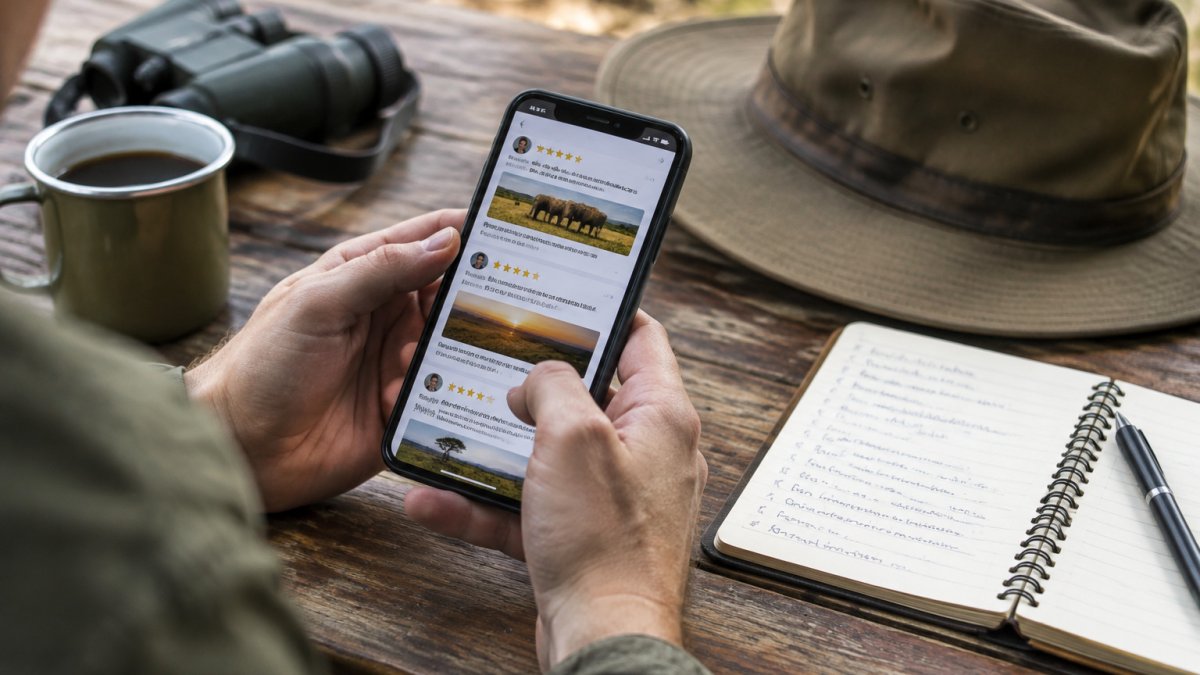
When reading reviews:
- Check the dates, and favour recent trips
- Look for specific details, such as named guides and parks
- Watch for repeated complaints about communication or itinerary changes
- Be wary of reviews that are all five stars with very similar wording
A common mistake is to trust a review at face value without checking whether it describes the same type of trip you want. A luxury honeymoon and a budget group tour have very different expectations.
Mid-Range African Safari Tours: Getting Value Without Cutting Corners
You do not need the most expensive operator to have a good trip. Many travellers find that a well-run mid-range tour gives excellent game viewing without luxury pricing. The key is to be clear about which costs you value most, such as a private guide, a better vehicle or more time in the park.
Compare what each operator includes. Some quotes cover park fees, meals and drinks, and others do not. A low headline price can hide extra costs, so ask for a full breakdown in writing.
Pricing depends on dates, group size and itinerary, so request a tailored quote from each operator. Isba African safaris bases its planning on your budget, so it is worth sharing your target range at the start.
Tailor-Made Safari With Local Guide: Questions to Ask Before You Book
Before you book a tailor-made safari with a local guide, ask these questions and compare the answers in writing:
- Who will be my guide, and how long have they worked in these parks?
- Will my group travel alone, or share vehicles with other guests?
- What happens if the itinerary changes or a park closes?
- How quickly will you reply to my questions, and who is my contact?
- What support is there if the vehicle breaks down?
- Can you accommodate different fitness levels and interests in one group?
- What is included in the price, and what is extra?
Isba African safaris states it responds to enquiries within 24 hours. Test those promises during your first contact, because a good operator will answer clearly and promptly.
For a detailed planning sequence, read our guide on planning a bespoke African safari. When you are ready to compare operators, our tailor-made safari communication checklist lists what to confirm before you commit.
Choosing a safari operator is about trust, and trust comes from clear answers. Take your time, ask detailed questions, and only pay once you are comfortable. Enquire for your tour booking with Isba African safaris to start a conversation about your trip.
Frequently Asked Questions
Which tour company is best for safaris?
There is no single best safari operator, because the right choice depends on your travel style, group size, budget and the parks you want to visit. Start by shortlisting operators that hold current licences, employ locally trained guides and have clear written terms on deposits and cancellations. Then compare how each one answers your specific questions about itinerary, vehicles and group logistics. A good operator will explain its reasoning patiently and will not pressure you to book quickly. Isba African Safaris offers tailor-made planning based on your budget and responds to enquiries within 24 hours.
Is 70 too old to go on safari?
Age alone rarely rules out a safari, but fitness, mobility and health do matter. Many safari vehicles require climbing in and out and long periods of sitting on rough tracks, so ask any operator how their vehicles are set up and whether seating and access can be adjusted. Mention any medical conditions or mobility needs when you enquire so the itinerary can be planned around them. Choosing lodges with short transfers and fewer long drives can make a significant difference for older travellers.
What questions should I ask before booking a safari?
Ask who your guide will be, how many years they have worked in the parks and whether they are locally trained. Ask whether vehicles are private or shared, how large the group will be and what happens if the itinerary has to change. Request the deposit schedule, cancellation terms and what is included in the quoted price, including park fees. Confirm how the operator will communicate with you before departure and who you can contact during the trip. Written answers to these questions are a useful test of transparency.