 How-to
7 Ways to Maximise Wildlife Sightings on Safari
Quick Summary
The best way to maximise wildlife sightings safari trips is to plan around season, time of day and guiding style. Dry months concentrate animals around water, and early morning and late afternoon drives are usually most productive. A knowledgeable guide and a longer stay add further chances to spot animals.
- Dry season concentrates animals at waterholes, making sightings more predictable.
- Early morning and late afternoon drives usually bring the most activity.
- Guided safaris, with experienced guides who read tracks and calls, tend to produce more sightings.
- Longer trips of five to seven nights cover more habitats and species.
- Ask your guide to pause and switch off the engine when you see movement.
Table of Contents
- Choosing the Best Months for African Wildlife Viewing
- Timing Your Game Drives: The Best Time of Day for Safari
- Guided Safari vs Self-Drive Safari: Which Improves Your Sightings?
- How Long to Go on Safari to Maximise Your Chances
- Reading Habitat, Weather and Animal Behaviour on the Drive
- Practical Tips to Spot, Track and Photograph Wildlife
- Behaving Responsibly Around Wildlife and Managing Expectations
- Planning Your Own Sighting-Focused Safari with Isba
- Frequently Asked Questions
Last Updated: 1 November 2026
Spotting wildlife on safari is part planning, part patience and part luck, and the best wildlife sightings safari trips balance all three. The same principles apply whether you are planning your first trip or your fifth.
Most of the variables that shape a sighting are within your control before you leave home. Choosing the right season, the right time of day and the right style of safari matters far more than most travellers expect.
Choosing the Best Months for African Wildlife Viewing
Wildlife viewing depends heavily on the season. The dry months generally concentrate animals around permanent water, which makes them easier to find. The wet months bring lush vegetation and newborn animals, but the bush is denser and animals spread out.
Dry season versus wet season
- Dry season: Animals gather at waterholes and rivers. Visibility is better and sightings are often more predictable.
- Wet season: Greener landscapes, fewer visitors and dramatic light. Sightings take more patience, but the photography can be rewarding.
- Shoulder months: Often a good balance of both, with fewer crowds than peak dry-season weeks.
Check the specific parks on your route, because rainfall patterns differ from region to region.
Timing Your Game Drives: The Best Time of Day for Safari
Most of the best activity happens in the cooler hours. Early morning drives catch predators returning from the night's hunt and herbivores moving to feed before the heat sets in. Late afternoon drives often bring similar activity as animals head back toward water.
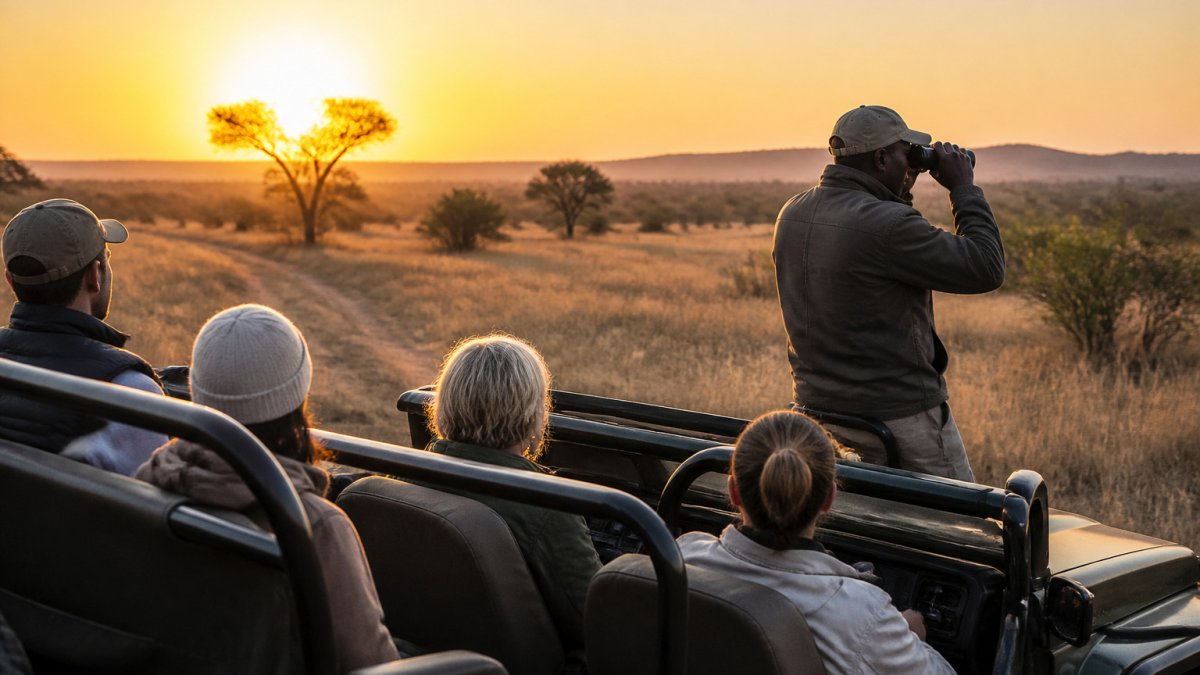
Midday is usually quiet. Many animals rest in shade, so a midday game drive often means long stretches with little to see.
Guided Safari vs Self-Drive Safari: Which Improves Your Sightings?
A guided safari usually gives you an experienced guide who reads tracks, calls and animal behaviour. That knowledge tends to produce more sightings, especially for elusive species.
Self-drive offers freedom and flexibility, but it asks more of you. Our guide sets out the support and vehicle rental arrangements a self-drive trip involves. You can compare experienced private guides and how to choose one before you decide.
Isba African safaris runs its own 4x4 vehicles with bilingual, locally trained guides, and offers flexible, tailor-made planning.
How Long to Go on Safari to Maximise Your Chances
Longer trips generally mean more game drives and more chances to see animals. Our guide to avoiding crowded camps and busy sightings explains how trip length affects what you actually see. Three to four nights gives you a taste.
Consider moving between parks, since each reserve has different wildlife. Staying in one area for longer can also pay off, because you learn the territories of resident animals.
Reading Habitat, Weather and Animal Behaviour on the Drive
Most travellers scan the bush hoping to spot something. Strong safari-goers do the opposite: they read the landscape first and let it tell them where to look, which is how the most rewarding wildlife sightings safari drives are made. The principle is simple, animals arrange themselves around water, food, shelter and safety, but applying it on a moving vehicle takes practice.
Start with water, then work outward
In the dry months, permanent water is the single strongest predictor of where animals will be. Rivers, pans and pumped waterholes draw herbivores in the morning and late afternoon, and predators often wait nearby. A useful habit is to ask your guide where the nearest reliable water is at the start of each drive, then watch how the vehicle route relates to it.
Use vegetation as a map
Different species favour different cover. Elephants push through woodland and leave broken branches and dung; giraffes browse the tops of acacia stands; grazers such as zebra and wildebeest prefer short grass where they can see approaching predators. When the habitat changes, a treeline giving way to open plain, or a riverbank thick with reeds, slow down and scan the transition zone.
Let temperature set the clock
On hot days, animals move in the cooler hours and rest in shade through the middle of the day. On cool, overcast mornings, activity often continues longer because animals do not need to retreat from the heat. After rain, many species become more dispersed and less tied to water, so sightings require more ground covered and more patience. A practical rule: the hotter and drier the conditions, the more predictable the waterhole pattern; the cooler and wetter, the more you rely on tracking and local knowledge.
Read behaviour, not just bodies
A single animal standing still tells you little. Watch for behaviour that signals what is about to happen:
- Alert postures: antelope staring in one direction, ears forward, foot stamping, often the first sign of a predator.
- Alarm calls: birds and monkeys call at predators; a sudden chorus of alarm calls can reveal a leopard or snake before you see it.
- Vultures: circling vultures often mean a kill or a carcass nearby; vultures dropping into trees can indicate a fresh kill.
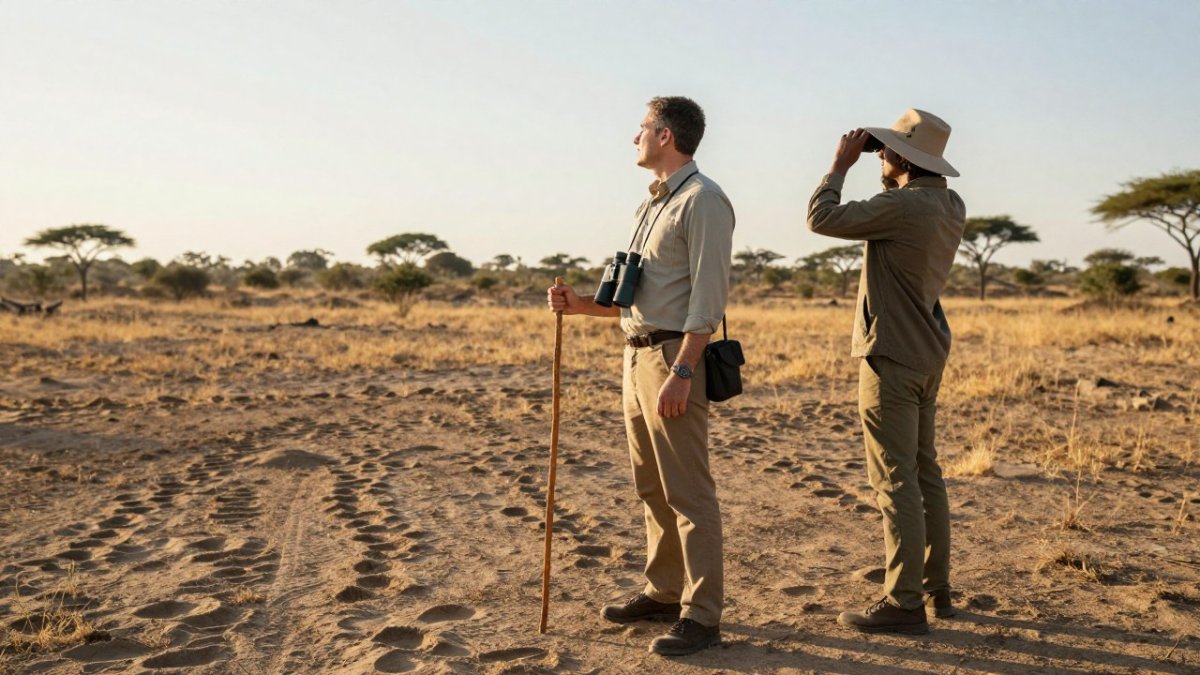
- Tracks and signs: fresh tracks, scat and drag marks on the road are worth slowing for, especially with a guide who can age them.
Weather windows worth planning around
A cold front or a clear, still morning after rain often produces excellent activity. Windy days can make animals skittish and harder to approach. If you have flexibility, tell your guide you would rather chase good conditions than stick rigidly to a schedule.
Practical Tips to Spot, Track and Photograph Wildlife
Spotting wildlife is a skill you can practise. The travellers who see the most are rarely the ones with the biggest lenses; they are the ones with a repeatable routine for each drive. The method below works whether you are in a guided 4x4 or self-driving.
Before you leave camp
- Know your targets: tell your guide which species matter most and ask what the realistic chances are in that area and season.
- Set up your kit: fit the longest lens you have, charge batteries, clear memory cards and attach a beanbag or monopod. Fumbling with gear while an animal moves is the most common missed-opportunity mistake.
- Dress for the drive: neutral colours, layers for cold mornings, a hat and sunglasses. Comfort matters because alertness drops when you are cold or squinting.
- Agree a plan: confirm drive length, whether you will stop for coffee, and how the group will signal a sighting so nobody talks over a quiet approach.
Scanning technique that actually works
Most people look at the middle distance and miss both the close shade and the far horizon. Use a slow, deliberate sweep:
- Near field: scan the shade under bushes and trees within 20-30 metres. Leopards, lions and smaller cats often rest close to the road.
- Mid field: sweep left to right in overlapping bands, pausing at habitat edges and water.
- Far field: check the horizon and open plains for silhouettes and dust.
- Sky and trees: glance up for vultures, eagles and monkeys, which often signal activity below.
Repeat the sweep every few minutes rather than staring at one spot. Movement is easier to catch in peripheral vision, so relax your focus and let your eyes be drawn to change.
On-drive habits that raise your hit rate
- Stay quiet: low voices and no sudden movements keep animals relaxed and visible for longer.
- Ask to pause: when you see movement, ask the guide to stop and switch off the engine. Idling vehicles mask sounds and unsettle some species.
- Use the vehicle: a beanbag on the window edge or a monopod braced on the roof gives you a stable platform. For long lenses, rest the lens on a rolled jacket if you have no support.
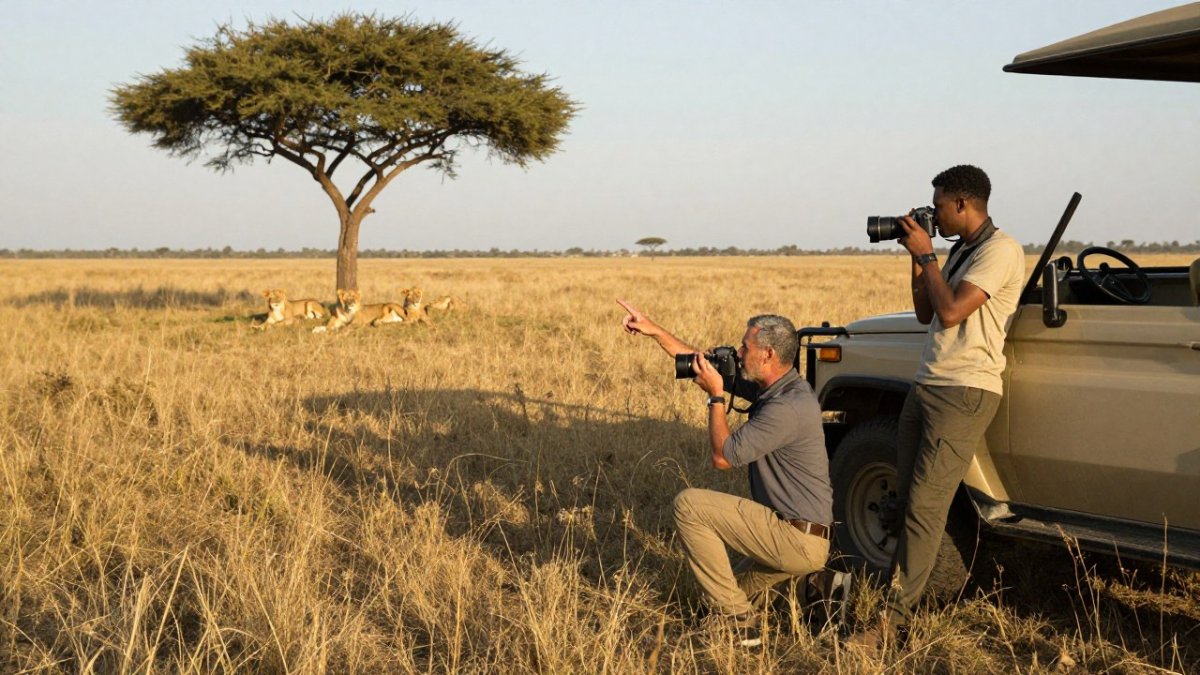
- Shoot in bursts: animals twitch, blink and turn quickly; a short burst improves your odds of a sharp frame.
- Check settings early: set a fast shutter speed for moving animals and raise ISO rather than missing the shot. Review and reset between sightings, not during them.
Managing the long game
Game drives are long and concentration fades. Rotate who scans which side of the vehicle, take short breaks when the guide stops for coffee, and drink water. On quiet days, switch your goal from big mammals to birds, tracks and behaviour, it keeps you sharp and often leads to unexpected sightings.
The article's on-drive guidance reduces to a few checkable habits, which are summarised below.
| Habit | Why it helps | Tip |
|---|---|---|
| Scan near field | Cats rest close to the road | Check shade within 20-30 metres |
| Stay quiet | Animals stay relaxed and visible | Use low voices, no sudden moves |
| Ask to pause | Idling engines mask sounds | Switch off the engine when you see movement |
| Shoot in bursts | Animals twitch and turn quickly | Take short bursts for sharper frames |
| Record as you go | Reveals patterns over time | Note time, location and behaviour |
Behaving Responsibly Around Wildlife and Managing Expectations
Respectful viewing protects both the animals and the experience. Keep a safe distance, never chase or crowd an animal, and follow your guide's instructions at all times.
Wildlife sightings are never guaranteed. Some days are quiet, and that is part of the nature of the bush. Setting realistic expectations, and enjoying the landscape and birdlife even when big animals are hidden, makes for a far more rewarding trip.
Planning Your Own Sighting-Focused Safari with Isba
Start by deciding which species matter most to you, then match them to the right season and parks. Read our step-by-step guide to building a bespoke itinerary to see how the process works.
Pricing depends on dates, party size, parks and vehicle arrangements, so the best next step is to get a tailored quote. Visit the Isba African safaris website or use the Enquire For Tour Booking option to talk through your plans.
Frequently Asked Questions
What is the best time of day to see wildlife on safari?
Early morning, shortly after sunrise, and the late afternoon before dusk are generally the most productive times for game drives. Many animals hunt or move during cooler hours and rest through the midday heat, when activity drops and sightings become harder. Actual sightings still depend on the animals' movements, the weather and the terrain, so no timing guarantees a specific animal.
Which months are best for African wildlife viewing?
The dry season, when vegetation thins and animals gather around permanent water, usually offers the clearest viewing. The wet season brings lush scenery, newborn animals and fewer tourists, but roads can become difficult and some animals disperse. The right month depends on the destination and the species you want to see, so Isba can advise on timing for your specific itinerary. Pricing varies by dates and quantity, so request a current quote through the website.
How many days do you need on safari to see a good range of wildlife?
Most travellers benefit from several days in each main area, because moving camp too often means spending more time in transit than on game drives. Longer stays allow repeated drives across different habitats, which improves the chance of seeing a wider range of species and behaviours. The exact number of days depends on your goals, your budget and the parks you choose, and Isba tailors itineraries to match these needs.
Is a guided safari better than a self-drive safari for wildlife sightings?
A professional guide usually improves sightings because they track animals by sound, tracks and past behaviour, and they communicate with other vehicles. Self-drive trips offer independence and flexibility but require careful navigation and vigilance from you. Isba provides both bilingual, experienced guides and self-drive support with 4x4 vehicles, so the best choice depends on your confidence and priorities.