 How-to
7 Self-Drive Safari Vehicle Rental Support Essentials
Last Updated: 27 October 2026
Quick Summary
Self-drive safari vehicle rental support encompasses the practical assistance you receive before, during, and after your African adventure, including preparation, roadside help, equipment provision, and communication that keeps your journey safe and enjoyable.
- Pre-departure checks must verify tyre condition, fluid levels, brakes, battery, wipers, safety equipment, and all vehicle systems before leaving the rental office.
- Roadside assistance in Africa should include recovery teams with response times specified for different regions and clear policies on vehicle damage beyond roadside repair.
- Your rental agreement must clarify what damage is your responsibility, the excess amount you'll pay, and insurance coverage for third-party liability.
- Communication equipment and offline maps should be confirmed as included with your rental for your specific route and parks.
- Discuss your driving experience level, transmission preference, and planned route in detail when enquiring about self-drive safari vehicle rental support.
Table of Contents
- What Self-Drive Safari Vehicle Rental Support Actually Means
- Pre-Departure Vehicle Checks: Your Self-Drive Safari Vehicle Checklist
- 4x4 Rental Roadside Assistance in Africa: What You Need to Know
- Essential Self-Drive Safari Vehicle Equipment Provided
- Self-Drive Safari Insurance and Excess: Protecting Your Investment
- Communication and Navigation Support During Your Self-Drive Safari
- Getting Started With Your Self-Drive Safari Vehicle Rental
- Frequently Asked Questions
What Self-Drive Safari Vehicle Rental Support Actually Means
Self-drive safari vehicle rental support encompasses the practical assistance you receive before, during, and after your African adventure. It's not just handing over keys, it's the entire ecosystem of preparation, roadside help, equipment provision, and communication that keeps your journey safe and enjoyable.
Self-drive safaris demand more than a reliable 4x4. You need confidence that help is genuinely available when you need it, that your vehicle won't leave you stranded in remote terrain, and that you're equipped for conditions most drivers have never encountered. This guide covers what actually matters when evaluating self-drive safari vehicle rental support.
The difference between adequate support and exceptional support often comes down to one thing: whether the company has genuinely thought through what goes wrong in the field.
Pre-Departure Vehicle Checks: Your Self-Drive Safari Vehicle Checklist
The most critical moment for self-drive safari vehicle rental support happens before you leave the rental office.
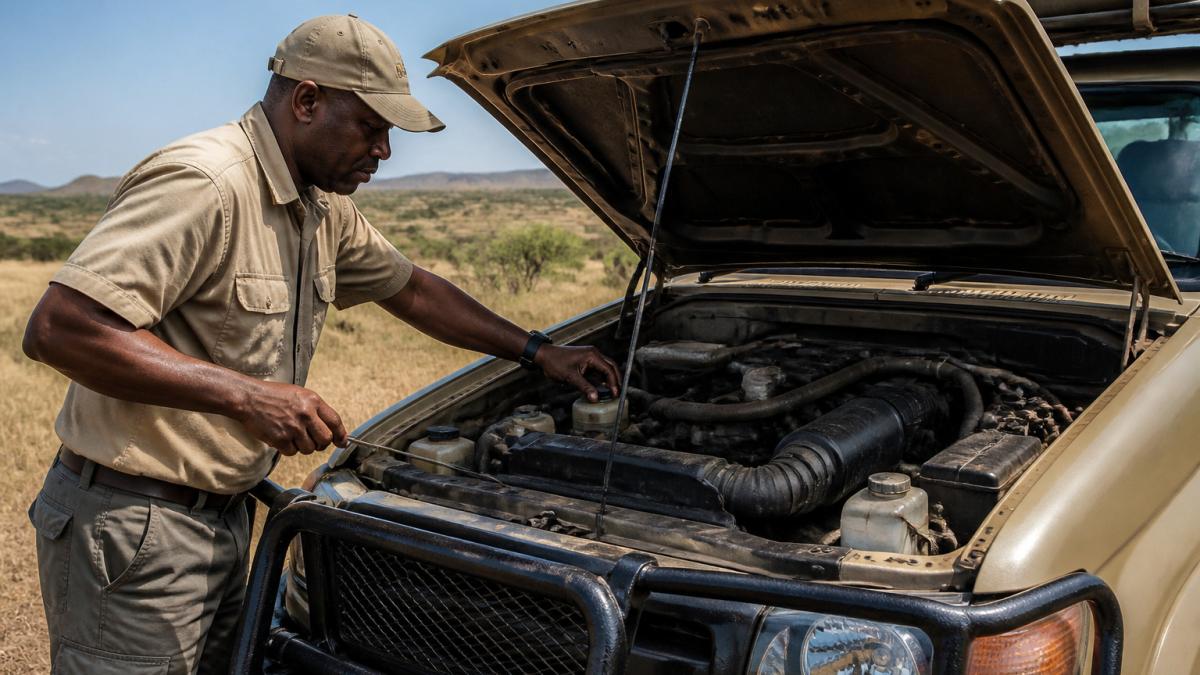
Your checklist should cover mechanical essentials: tyre tread and pressure, all fluid levels (engine oil, coolant, brake fluid, windscreen washer), brake pad condition, battery terminals, and wiper blade function. Beyond mechanics, verify that safety equipment is present and functional, fire extinguisher, first aid kit, warning triangles, and a working spare tyre with proper inflation.
Check the vehicle's documentation carefully. Ensure your rental agreement specifies what damage is your responsibility and what the company covers. Clarify the excess amount you'll pay if something goes wrong. Ask about the company's policy on driving in national parks versus private reserves, as some insurers exclude certain areas.
Test every system before you drive away. Lights, indicators, horn, air conditioning, and heating should all work. Start the engine and listen for unusual sounds. Drive the vehicle around the parking area to feel how it handles.
Your pre-departure checklist should verify these essential vehicle systems and documentation before leaving the rental office.
| Item | What to check | Why it matters |
|---|---|---|
| Tyres | Tread depth and pressure | Safe handling in remote terrain |
| Fluids | Engine oil, coolant, brake fluid, windscreen washer | Vehicle reliability in the field |
| Brakes | Pad condition and function | Critical safety component |
| Battery | Terminal condition | Prevents electrical failure |
| Wipers | Blade function | Essential for visibility |
| Safety equipment | Fire extinguisher, first aid kit, warning triangles, spare tyre | Emergency preparedness |
| Rental agreement | Damage responsibility and excess amount | Clarifies your financial liability |
| All systems | Lights, indicators, horn, air conditioning, heating | Confirms vehicle is roadworthy |
4x4 Rental Roadside Assistance in Africa: What You Need to Know
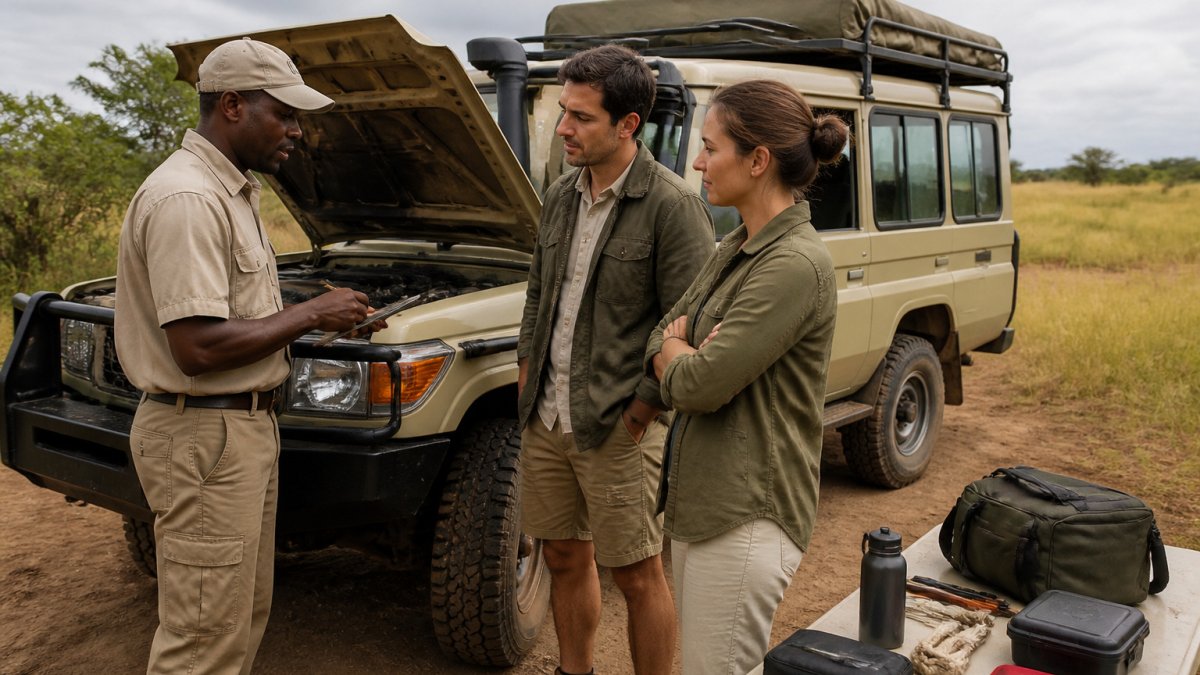
When your 4x4 breaks down in the bush, roadside assistance becomes your lifeline. It's worth understanding what support you're actually getting.
Roadside assistance in Africa can involve a recovery team, not just a phone number. Check what support is available.
Ask specifically how long response times are in different regions. Find out what happens if your vehicle is damaged beyond roadside repair.
Ask whether the operator has recovery equipment. If the company operates its own fleet, ask what support it can provide.
Verify that you have a communication plan for your route. Ask whether your rental company provides communication equipment.
Essential Self-Drive Safari Vehicle Equipment Provided
The equipment included with a self-drive safari vehicle rental should reflect the demands of driving in African wilderness.
Check what equipment is included with your rental.
Ask what navigation tools, if any, are included with your rental.
Check what's included for vehicle maintenance and ask what spare parts, if any, are on board.
Safety and comfort equipment matters too. For longer journeys, verify that the vehicle has adequate storage for your supplies.
Self-Drive Safari Insurance and Excess: Protecting Your Investment
Check what insurance arrangements apply to your self-drive safari vehicle rental.
Ask your rental company what insurance arrangements apply and what they cover.
Ask whether an excess applies and what your liability would be if damage occurs.
Ask whether any insurance covers third-party liability and what limits apply.
Ask what constitutes "fair wear and tear" versus damage for which you may be charged.
Communication and Navigation Support During Your Self-Drive Safari
Staying connected and oriented in African wilderness requires planning.
Ask your rental company about communication coverage and emergency planning for your route.
[Internal link: Safari Trip Planning Communication Checklist ensures you've covered all necessary communication planning steps before departure.]
Ask what navigation support, if any, is available for your route.
Ask whether offline maps are available for your route.
Ask how to report an issue and what response time to expect.
Getting Started With Your Self-Drive Safari Vehicle Rental
When you're ready to enquire about a self-drive safari, discuss your experience level and expectations.
[Internal link: Contacts provides the information you need to proceed with your reservation.]
Be transparent about your self-drive experience. Have you driven in challenging conditions before? Are you comfortable with manual transmissions or do you need automatic? Do you have experience with high-clearance vehicles?
Discuss your planned route in detail. Which parks will you visit? What's your daily driving distance? Are you planning to camp or stay in lodges?
Confirm exactly what's included in your rental.
Ask about the company's experience with your specific route and parks.
Self-drive safari vehicle rental support involves more than having a vehicle available.
Getting your self-drive safari right requires more than finding the cheapest rental. At Isba African safaris, we operate our own 4x4 Land Cruisers. Get started with Isba African safaris.
Frequently Asked Questions
What should I check before collecting a self-drive safari vehicle?
Before collecting your vehicle, verify the condition of all tyres (including the spare), check fluid levels (engine oil, coolant, brake fluid), test all lights and wipers, confirm the spare wheel and jack are present, inspect the undercarriage for damage, and ensure the fuel tank is full. Request a detailed handover checklist from your rental provider and photograph any existing damage.
Is roadside assistance available on a self-drive safari in Africa?
Ask what roadside assistance, if any, is available with your vehicle rental, and confirm the response time and coverage area before departing.
What self-drive safari vehicle equipment should come with my rental?
Ask what equipment is included with your rental and confirm the full equipment list before collection.
Do I need specialist insurance for a self-drive safari rental vehicle?
Ask what insurance and excess arrangements apply to your rental and what the policy covers.