 Listicle
Best African Safari for Photography Enthusiasts
Last Updated: October 23, 2026
Quick Summary
The best African safari for photography enthusiasts combines a destination with reliable wildlife concentrations and dramatic light, guides trained specifically to support photography, and operators flexible enough to adapt to animal activity and light conditions rather than following fixed schedules. Tanzania and Kenya deliver mass migrations and predator interactions, whilst Botswana and South Africa offer habitat diversity and year-round reliability.
- Tanzania's Serengeti and Kenya's Masai Mara represent the gold standard, with the Mara offering year-round viewing and higher animal density in more compact geography.
- Photography-focused guides position vehicles for optimal light, anticipate animal behaviour, and stay with compelling moments rather than moving on schedule.
- Vehicle pop-up roofs, suspension quality, camera support mounts, and small group sizes directly improve photographic positioning and image sharpness.
- Early morning starts during golden hour (first two hours after sunrise) deliver warm, directional light that determines image quality more than camera settings.
- Flexible itineraries that adapt to wildlife activity and light conditions, rather than fixed routes, are essential for capturing exceptional images.
Table of Contents
- What Makes an African Safari Ideal for Photography Enthusiasts
- Best African Countries for Wildlife Photography
- Private Safari Guides in Africa: Why Expert Guidance Matters
- Wildlife Photography Safari Tips for Capturing Exceptional Images
- Camera Equipment for Safari Photography: What You Need
- Choosing the Right Safari Operator for Your Photography Goals
- Conclusion
- Frequently Asked Questions
What Makes an African Safari Ideal for Photography Enthusiasts
Capturing wildlife in its natural habitat demands more than a good camera. It requires optimal light, guides who understand animal behaviour, and vehicles positioned for unobstructed shots. The best African safari for photography enthusiasts combines all three.
Most safari operators treat photography as an afterthought, prioritising general game viewing, racing between sightings or stopping briefly when animals appear. Photography-focused safaris build itineraries around light quality, anticipate animal movements, and position vehicles for compelling compositions rather than quick ticks on a checklist.
What separates a memorable safari from a frustrating one often comes down to whether your guide understands what you're trying to capture. A guide trained for standard tourism will spot a lion and move on.
Geography matters too. Some countries offer predictable animal concentrations during specific seasons; others provide habitat diversity that creates visual interest beyond the animals themselves. The choice between destinations shapes everything that follows.
Best African Countries for Wildlife Photography
Tanzania and Kenya: The Serengeti and Masai Mara
Tanzania's Serengeti and Kenya's Masai Mara represent the gold standard for African wildlife photography. Both regions deliver exceptional predator-prey interactions, massive herbivore concentrations, and dramatic landscapes that frame your subjects.
The Serengeti dominates during the Great Migration (roughly June to October in the northern parks, December to March in the southern circuit). Millions of wildebeest and zebras crossing rivers whilst predators hunt creates some of the most dynamic photography opportunities on the continent.
Kenya's Masai Mara offers year-round wildlife viewing with a more compact geography than the Serengeti, meaning higher animal density and more predictable positioning.
Both regions have established infrastructure, multiple lodge options, and experienced guides. The downside is popularity: during peak season (July-October), you'll encounter other vehicles around major sightings. Early morning starts and flexibility with your guide help you avoid the crowds, but solitude isn't guaranteed.
Botswana and South Africa: Diverse Habitats and Game Density
Botswana's Okavango Delta and Chobe National Park offer a different proposition. The Okavango is a wetland ecosystem, combining water-based and land-based game viewing in a landscape entirely different from the Serengeti's open plains.
Chobe National Park delivers one of Africa's highest elephant concentrations. If your priority is elephant photography, Chobe's dry season (May-October) is unmatched. The river becomes the focal point, and animals converge predictably. This concentration makes composition straightforward, you're working with abundance rather than scarcity.
South Africa's Kruger National Park and private reserves within the Greater Kruger Area offer year-round wildlife viewing and excellent infrastructure. Kruger is vast and well-managed, with established road networks that guide positioning.
Botswana and South Africa suit photographers who value habitat diversity and predictable animal encounters over the raw spectacle of mass migrations. They also tend to have smaller tourist volumes in private concessions, which means fewer competing vehicles around key sightings.
Private Safari Guides in Africa: Why Expert Guidance Matters
Your guide shapes every photographic decision on safari. The difference between a guide trained for general tourism and one trained specifically for photography is substantial.
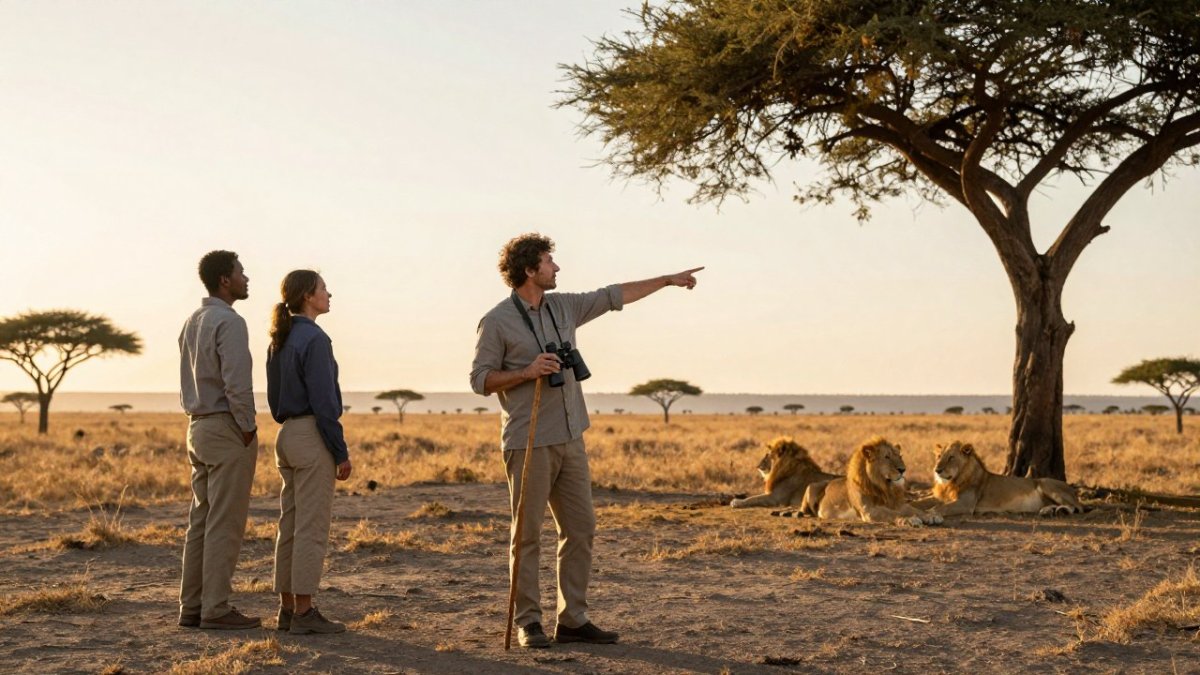
A photography-focused guide understands light direction, animal behaviour patterns, and vehicle positioning in ways that directly improve your images.
Guides in established reserves like the Serengeti and Masai Mara accumulate knowledge over years, individual animals, territorial patterns, and seasonal behaviours that aren't in any guidebook.
The relationship between guide and photographer also matters. A guide who understands your skill level and goals can calibrate their approach: beginners need more explanation and positioning support, while advanced photographers often want autonomy and time to compose.
At Isba African safaris, we've built a team of bilingual, locally trained, and experienced guides. They respond to client needs within 24 hours, understand flexible scheduling, and prioritise photographic positioning over speed.
Wildlife Photography Safari Tips for Capturing Exceptional Images
Timing and Positioning for the Best Light
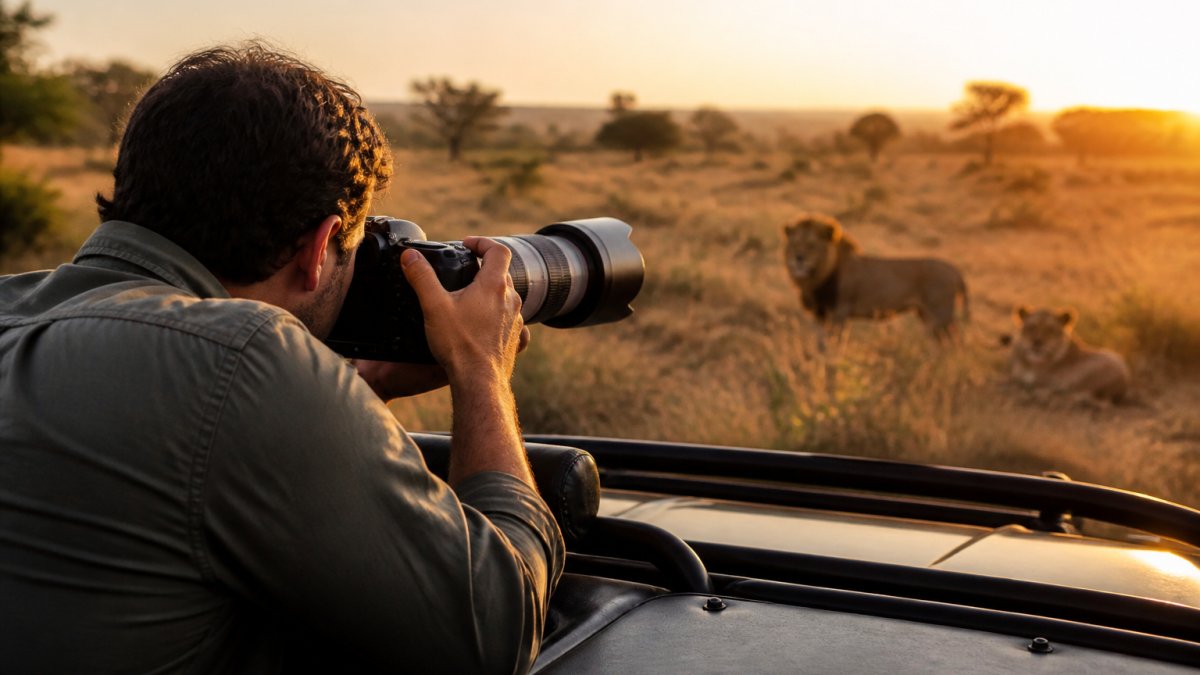
Light quality determines image quality more than any camera setting. Golden hour, the first two hours after sunrise and the last two before sunset, delivers warm, directional light that sculpts animal forms and creates visual depth.
Early starts are non-negotiable: you'll be in the vehicle before dawn, positioned and ready when animals are most active and light is optimal.
Vehicle positioning determines whether you're shooting into light, with light, or sidelighting your subject. Sidelighting creates dimension and texture; backlighting creates rim light that separates subjects from backgrounds; frontal lighting is often least flattering.
Reading Animal Behaviour and Anticipating Moments
The difference between a snapshot and a compelling image often comes down to timing. An animal moving, hunting, or interacting with others creates narrative. A stationary animal is documentation.
Reading behaviour means watching for signs that something's about to happen. Predators shift posture before stalking. Herbivores become alert before fleeing. Young animals play in predictable patterns. A guide who understands these signals can position you before the action unfolds rather than after it's concluded.
This requires patience. You'll spend long periods watching animals do nothing, waiting for behaviour to shift. Photography-trained guides understand this; general-tourism guides often move on, assuming nothing interesting is happening. That's where the photographic advantage emerges.
Anticipation also means understanding seasonal patterns. During the Great Migration, river crossings happen at specific locations during specific weeks. Predator activity peaks when prey is concentrated. Mating seasons create behavioural opportunities.
Camera Equipment for Safari Photography: What You Need
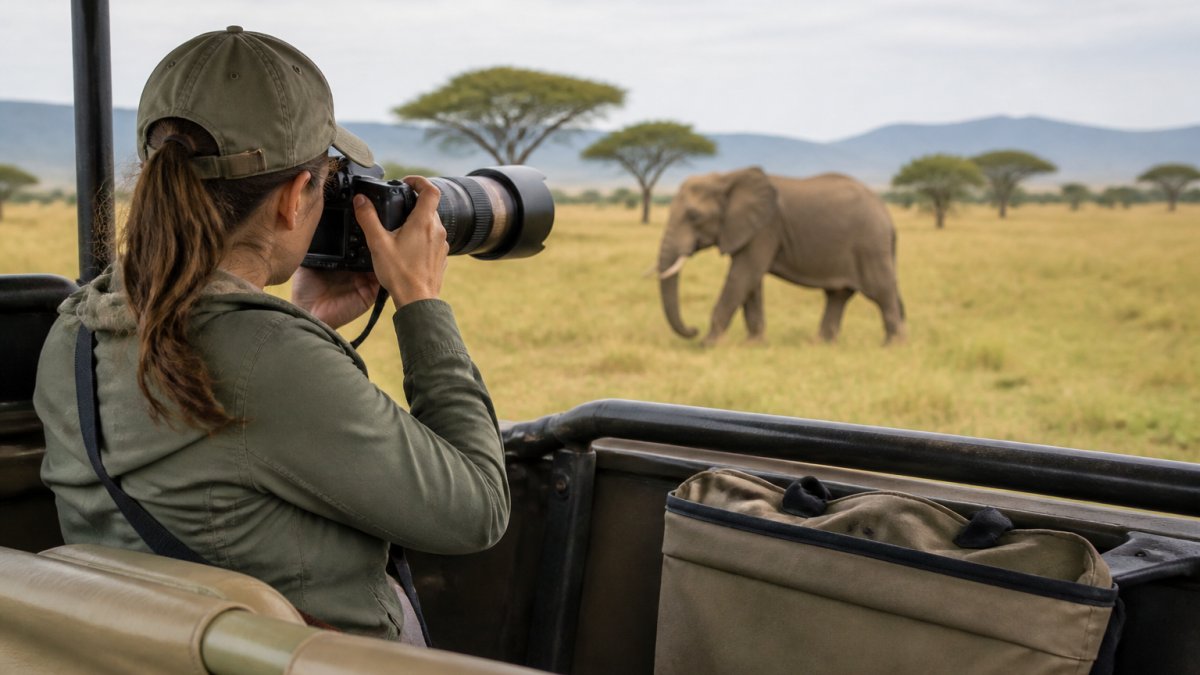
Your camera body matters less than your lenses. A professional DSLR or mirrorless camera is standard, but the real investment is telephoto glass.
A 100-400mm lens covers most general wildlife situations. It's versatile enough for landscape context, tight enough for distant subjects, and relatively stable for hand-holding from a moving vehicle.
For serious work, a 150-600mm lens extends your reach significantly, capturing frame-filling predator portraits and distant behaviour.
A wide-angle lens (16-35mm) is underrated on safari. Landscape context, environmental portraits showing animals in habitat, and wide-angle action sequences all benefit from wider focal lengths.
Stabilisation matters. Whether through in-body stabilisation, lens stabilisation, or a monopod mounted to the vehicle, reducing camera shake improves keeper rates significantly.
Bring backup batteries and substantial storage.
A circular polarising filter reduces glare and enhances colour saturation in harsh light. It's one of the few filters that consistently improves wildlife images.
Choosing the Right Safari Operator for Your Photography Goals
Tailored Itineraries and Flexible Scheduling
Generic safari itineraries follow fixed routes and fixed timing: you're in the vehicle at set hours, moving to predetermined locations, and adapting to whatever wildlife appears. This works for general tourism but constrains photography.
Photography-focused operators build flexibility into itineraries.
This flexibility requires operators who trust their guides and don't micromanage vehicle movements, plus small group sizes. A vehicle with eight passengers has competing interests and limited flexibility; a vehicle with four can accommodate photographic positioning more easily.
Ask potential operators directly: Do you adapt itineraries based on wildlife activity and light conditions, or follow fixed routes? Can your guides stay with compelling situations, or do they move on schedule? What's your typical vehicle occupancy?
Vehicle Setup and Photography-Specific Amenities
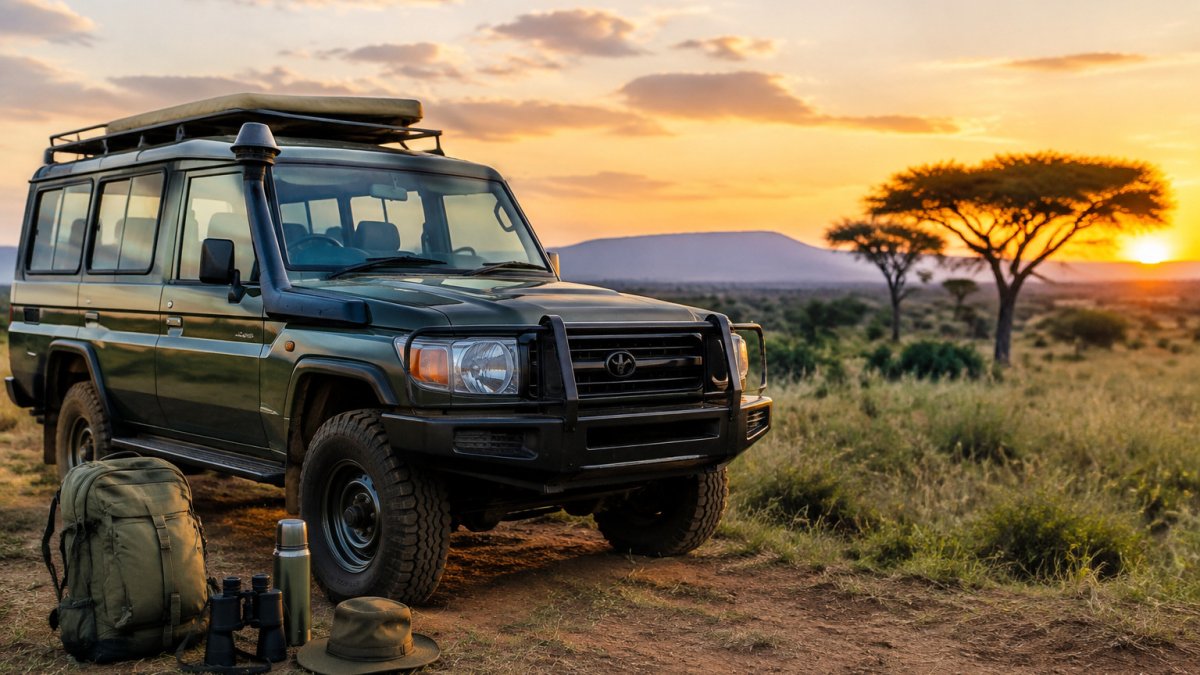
Vehicle design affects your photographic comfort and positioning. Pop-up roofs allowing standing and full 360-degree visibility are standard for quality safari vehicles. Open-sided vehicles offer unobstructed sightlines but expose you to sun and weather; enclosed vehicles provide shelter but limit positioning options.
The suspension and ride quality matter more than you'd expect. A vehicle that bounces excessively makes hand-holding telephoto lenses difficult. Smoother suspension means sharper images and less fatigue over long days.
Equipment mounts vary. Some vehicles have camera support rails or monopod mounts. Others require you to hand-hold or brace your lens against the window frame. Dedicated camera mounts significantly improve stability and reduce arm fatigue during long shooting sessions.
At Isba African safaris, we operate our own fleet of comfortable 4x4 safari Land Cruisers. We also offer flexible, tailor-made itineraries that adapt to animal activity and light conditions rather than following fixed schedules.
| Consideration | Impact on Photography | What to Ask |
|---|---|---|
| Vehicle occupancy | Smaller groups allow more flexibility and positioning | What's your typical group size? |
| Pop-up roof | Enables standing and 360-degree sightlines | Do your vehicles have pop-up roofs? |
| Suspension quality | Smoother ride improves image sharpness | How stable are your vehicles on rough terrain? |
| Guide training | Photography-focused guides position for images | Are your guides specifically trained for photography? |
| Itinerary flexibility | Allows staying with compelling moments | Can you adapt schedules based on wildlife activity? |
| Operator scale | Smaller operators often offer more customisation | How many clients do you guide annually? |
Conclusion
The best African safari for photography enthusiasts combines three elements: a destination with reliable wildlife concentrations and dramatic light, guides trained specifically to support photography, and operators flexible enough to adapt to animal activity and light conditions rather than following fixed schedules.
Tanzania and Kenya deliver the raw spectacle of mass migrations and predator interactions. Botswana and South Africa offer habitat diversity and year-round reliability. The choice depends on whether you prioritise seasonal spectacle or consistent opportunities.
What distinguishes a genuinely photography-focused operator from one that simply uses photography as a marketing angle comes down to operational decisions: vehicle configuration, guide training, group sizes, and itinerary flexibility. These aren't luxuries, they're the practical foundation that separates frustrating safaris from transformative ones.
If you're planning a photography-focused safari, connect with an operator who understands the specific demands of wildlife photography. At Isba African safaris, we specialise in crafting bespoke, unforgettable African travel experiences.
Frequently Asked Questions
Which African country is best for a photography safari?
Tanzania and Kenya lead for iconic moments, the Serengeti's Great Migration and Masai Mara's dense wildlife concentration offer unmatched opportunities. Botswana excels for intimate encounters and varied habitats; South Africa combines accessibility with exceptional game density. Your choice depends on whether you prioritise dramatic migrations, diverse species, or reliable daily sightings. The best African safari for photography enthusiasts matches your specific interests and experience level.
What should I look for in a private safari guide?
Seek guides with extensive local knowledge, proven tracking skills, and genuine enthusiasm for wildlife behaviour. The best private safari guides in Africa understand animal patterns, predict movements, and position you for optimal photography angles without disturbing subjects. Ask about their experience with photography-focused clients, their communication style, and how they handle unexpected situations. Experienced guides transform good photos into exceptional ones through timing and positioning.
What camera equipment should I take on an African safari?
A telephoto lens (200-600mm) is essential for distant subjects; a versatile mid-range lens (24-70mm) handles landscapes and closer encounters. Bring a sturdy tripod or bean bag for vehicle-mounted stability, extra batteries, and memory cards, reliable power is limited in remote areas. Camera equipment for safari photography should prioritise reliability over weight; weather sealing protects against dust and sudden rain. Consider a smaller backup camera for peace of mind.
Are private safaris better for wildlife photography than group tours?
Private safaris offer significant advantages: flexible timing to chase light and animal activity, personalised routes based on your interests, and no competition for positioning. Your guide can linger at compelling scenes rather than adhering to group schedules. However, shared safaris reduce costs and provide social experience. The best choice depends on your budget, experience level, and whether you value exclusivity or community.