 How-to
Can Beginners Take Great Safari Photos? Here's How
Quick Summary
Beginners can take strong safari photography shots by starting in shutter priority mode, using at least 1/500 second for moving animals, and choosing a telephoto zoom such as a 100-400mm lens. Aperture of f/5.6 to f/8 keeps the animal sharp while softening the background.
- Start in shutter priority or manual mode for unpredictable wildlife action.
- Use at least 1/500 second for grazing or walking animals.
- Choose 1/1000 second or faster for running animals and birds in flight.
- Use a long telephoto zoom such as 100-400mm or 150-600mm.
- Rest your lens on a beanbag and turn off the engine when animals are close.
Table of Contents
- Start With Your Camera Settings for Safari Photography
- Choosing the Best Lens for Safari Photography
- The Safari Photography Equipment You Actually Need
- How to Photograph Wildlife From a Safari Vehicle
- Timing Your Shoots: The Best Light and Game Viewing Hours
- Common Beginner Mistakes and How to Avoid Them
- Preparing Your First African Photography Safari With Isba
- Frequently Asked Questions
Start With Your Camera Settings for Safari Photography
Last Updated: October 28, 2026
Safari photography is harder than most beginners expect. Animals move fast, light changes by the minute, and the vehicle rarely stays still. The good news is that most of these problems come down to a few camera settings you can learn before you leave home.
Start in shutter priority or manual mode. Shutter priority lets you control motion while the camera handles exposure. This gives you a reliable starting point when the action is unpredictable.
Shutter Speed for Moving Animals
Shutter speed decides whether a running animal looks sharp or smeared. For most wildlife, aim for at least 1/500 second. Birds in flight and fast predators often need 1/1000 second or faster.
- Slow animals like sleeping lions: 1/250 second
- Grazing or walking animals: 1/500 second
- Running animals and birds in flight: 1/1000 second or faster
Watch out: Shooting too slowly is the most common mistake. Check your preview on the back screen, and zoom in to confirm the eyes are sharp.
Aperture, ISO and Exposure in Low Light
Aperture controls depth of field and how much light reaches the sensor. Many guides suggest f/5.6 to f/8 for safari work, since this keeps the animal sharp while the background softens. Wider apertures help in dim conditions but leave less of the animal in focus.
ISO is the last setting to adjust. Raise it only when shutter speed and aperture are already set. Many modern cameras handle ISO 1600 to 3200 cleanly, so do not fear a little grain over a blurry shot.
The settings below summarise the starting points for shutter speed and exposure that the article recommends.
| Subject | Shutter speed | Note |
|---|---|---|
| Slow animals like sleeping lions | 1/250 second | Minimum for resting subjects |
| Grazing or walking animals | 1/500 second | Recommended baseline for most wildlife |
| Running animals and birds in flight | 1/1000 second or faster | Freezes fast movement |
| Aperture for safari work | f/5.6 to f/8 | Keeps the animal sharp, softens background |
| ISO on modern cameras | 1600 to 3200 | Handled cleanly; set last |
Choosing the Best Lens for Safari Photography
A long telephoto lens is the standard choice for safari work. Most photographers find that a 100-400mm or 150-600mm zoom covers the range from distant elephants to close-up birds. Wider lenses help when animals approach the vehicle or when you want to show the landscape around them.
Lens choice depends on how you travel. If your group uses an open vehicle, a lighter zoom is easier to hold steady.
The Safari Photography Equipment You Actually Need
You do not need the most expensive kit to take good photos. Focus on these essentials:
- A camera body with fast autofocus and good high-ISO performance
- One telephoto zoom lens
- Spare batteries, since cold mornings and long drives drain power quickly
- Several large memory cards
- A beanbag or support that rests on the vehicle door
- A lens cloth, because dust is constant on dirt roads
Many beginners bring too many lenses. Pick one versatile zoom and learn it well before buying more.
How to Photograph Wildlife From a Safari Vehicle
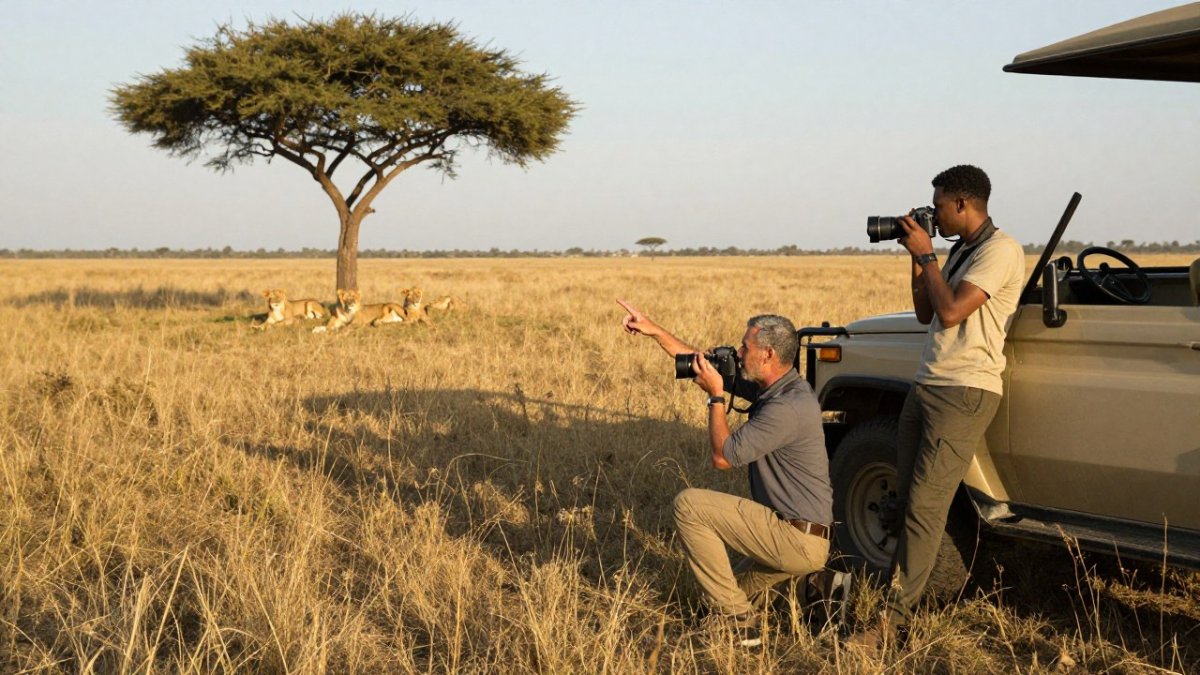
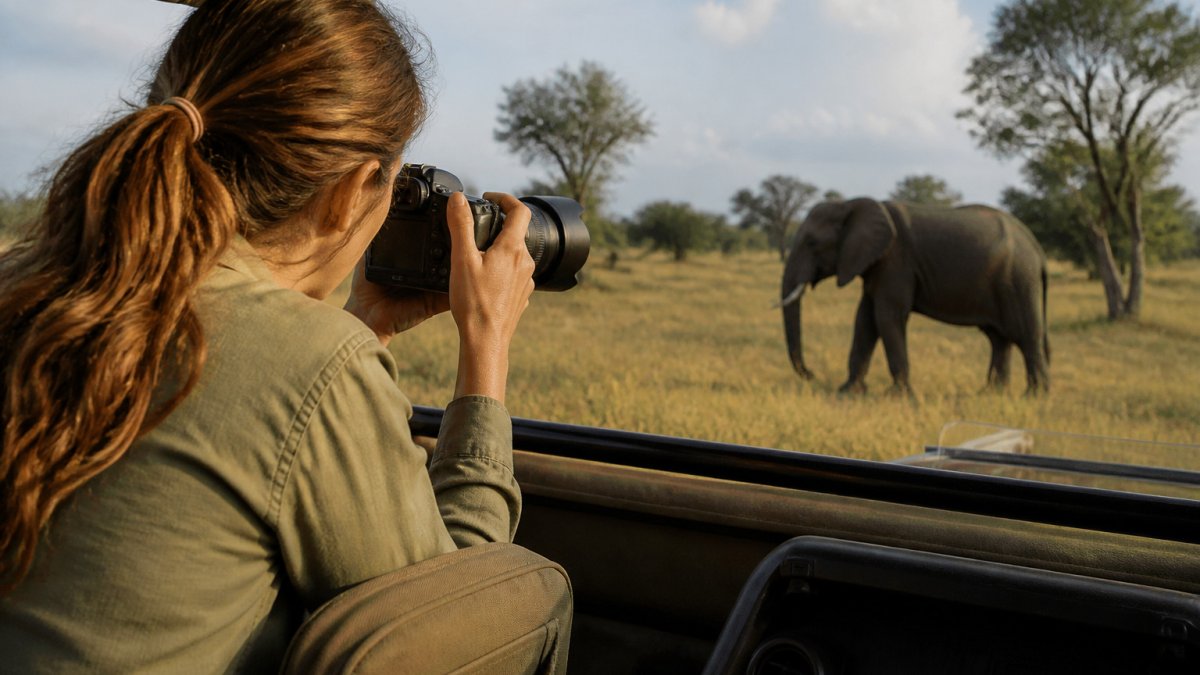
The vehicle is your camera platform. Keep it steady by resting your lens on a beanbag placed on the door frame or window ledge. Turn off the engine when the animals are close, since vibration blurs images.
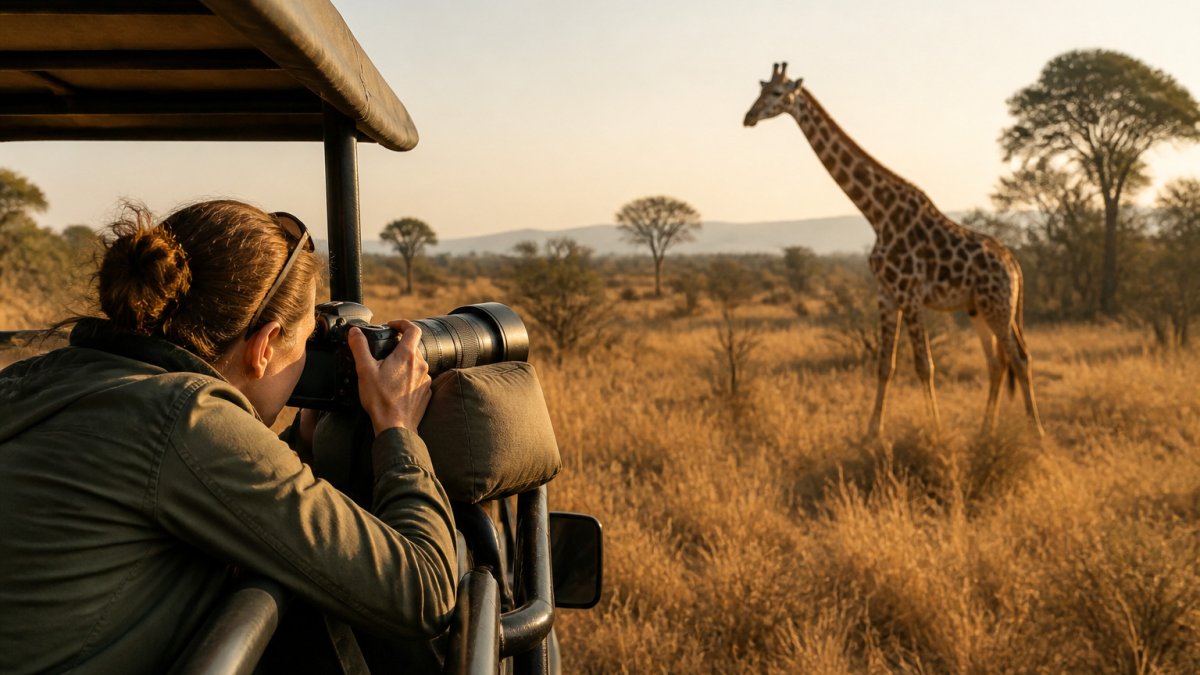
Ask your guide to position the vehicle so the light falls on the animal's face and the sun sits behind you.
Timing Your Shoots: The Best Light and Game Viewing Hours
Early morning and late afternoon offer the warmest light and the most active animals. Midday sun creates harsh shadows, so many photographers use it for landscapes or resting animals instead.
Plan your drives around these windows.
Common Beginner Mistakes and How to Avoid Them
- Shooting too slow: Keep shutter speed high enough to freeze movement.
- Ignoring the background: Check the frame before you press the button.
- Cropping too tightly: Leave room around the subject so you can edit later.
- Forgetting spare batteries: Carry at least two fully charged.
- Chasing every sighting: Pick the few moments that matter and shoot them well.
Preparing Your First African Photography Safari With Isba
Preparation makes the biggest difference on your first trip. Share your photography goals when you enquire, and we will tailor the itinerary to suit your interests. Our bilingual, locally trained guides can help you plan your safari.
Enquire for tour booking to start planning your photography safari with Isba African safaris.
Frequently Asked Questions
What camera settings should beginners use for safari photography?
Start in shutter priority or manual mode. For moving animals, a shutter speed of at least 1/1000 second helps freeze motion, and 1/2000 second or faster suits running or flying subjects. Set aperture to between f/5.6 and f/8 for a sharp subject with some background separation, and raise ISO until the shutter speed holds, accepting some grain rather than blur. Use continuous autofocus with burst mode, and check your exposure on the histogram regularly as light changes quickly on game drives.
What camera and lens are best for a first safari?
A camera body with fast autofocus and good high-ISO performance matters more than megapixels. For the best lens for safari photography, a telephoto zoom covering roughly 100-400mm or 150-600mm gives flexibility for animals at varying distances.
How do you photograph wildlife from a safari vehicle?
Use a beanbag or window mount on the vehicle door or roll bar to stabilise the lens, and keep your shutter speed high to counter vehicle movement. Ask your guide to switch off the engine when possible, as vibration reduces sharpness. Shoot through an open window only when the guide confirms it is safe, and keep your lens and body clear of the sides of the vehicle. Frame animals with their eyes in the upper third of the image for a stronger composition.
How can you prepare for your first African photography safari?
Practise your camera settings at home on moving subjects before you travel, and pack spare batteries, memory cards and a dust-proof bag. Bring a lens cloth for dust. Share your photography goals at the planning stage, so the itinerary suits your interests.